
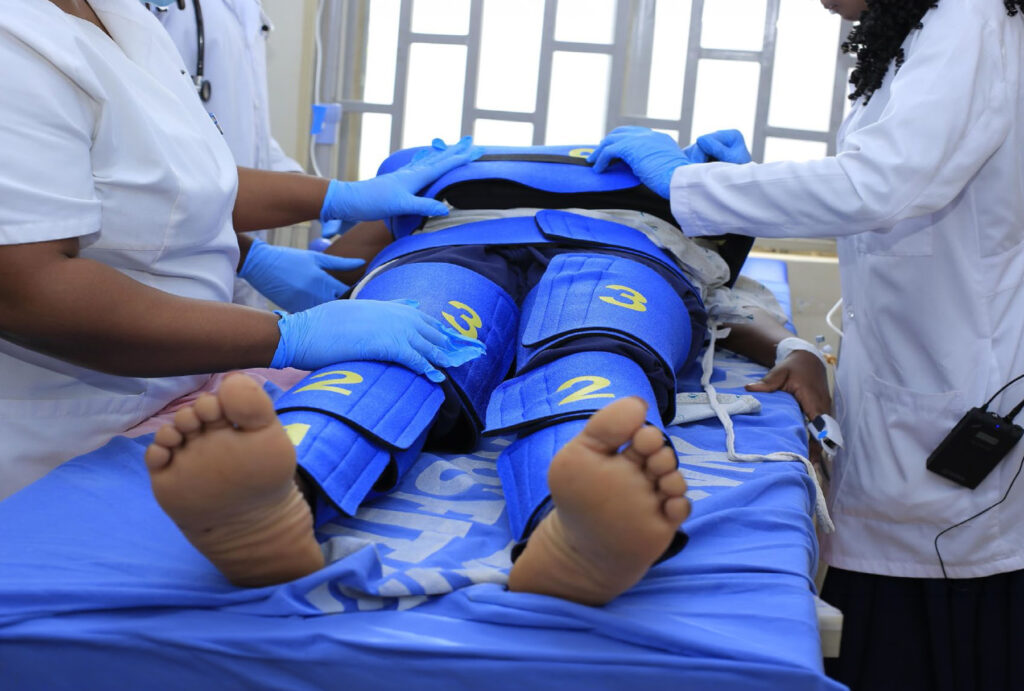
Postpartum hemorrhage (PPH)—excessive bleeding after childbirth—remains the leading cause of maternal death in Uganda and across Sub-Saharan Africa.
One simple, low-cost device is changing this story: the Non-Pneumatic Anti-Shock Garment (NASG). This lightweight, reusable suit made of neoprene and Velcro applies gentle pressure when wrapped around a bleeding mother. It redirects blood flow to vital organs—the heart, lungs, and brain—buying critical time until definitive treatment is available.
In 2023, through the Mother Baby Friendly Hospital Initiative (MBFHI), Save the Mothers donated 25 NASGs to six hospitals: Kawolo, St. Francis Naggalama, Mukono General, St. Francis Nyenga, Mukono Church of Uganda, and Buvuma Health Centre IV.
In August and September 2025, Save the Mothers returned to hear from health workers and mothers whose lives have been touched by this innovation. These are their stories.
Midwife Alunga Yudaya at Kawolo Hospital
“Before NASG use, we registered many maternal deaths, especially due to PPH. It was heartbreaking to see mothers lose their lives even after using medicines and blood transfusions. The anti-shock garments have been incredibly helpful. Since we received training and the garments three years ago, we have achieved remarkable results. As midwives, we can now manage PPH promptly and prevent mothers from going into shock.
Sr. Nekesa at Kawolo Hospital
“Since receiving the NASGs, we have never lost a mother to PPH. These garments are a true lifeline. I recall the first case we saved: a para 4 mother referred from Buvuma Health Centre IV. Her baby was alive. The mother arrived in shock and was paper white, cold, with a hemoglobin of 3. We had no blood, only frozen plasma. The doctor instructed us to apply the NASG first. After stabilizing her with plasma, the doctor performed a total hysterectomy. She survived. Without the NASG, she would have died. The garment remained on her during and after surgery until she stabilized.”
“By July 2025, we had saved around 23 mothers with the NASG. It has become an essential part of our PPH kit. When we manage PPH, the NASG reduces blood loss, a critical factor since blood is scarce in hospitals.
“To the donors at Save the Mothers, thank you for introducing this innovation to our country. In all my 16 years as a midwife, I had never seen an anti-shock garment. Since 2023, I have not observed a maternal death from PPH at our hospital. We urgently need more suits, especially for lower health facilities, along with training on their use. The garments are reusable and elastic, though they loosen over time, so replenishment is important.
Sr. Namuddu Margaret at St. Francis Naggalama Hospital
“We received a mother with a ruptured uterus. She had two previous scars and came in severe pain. The baby was already dead. The mother began deteriorating on the table. We applied the NASG for about 10 hours, stabilizing her in HDU. She survived. Without it, we would have lost her too.”
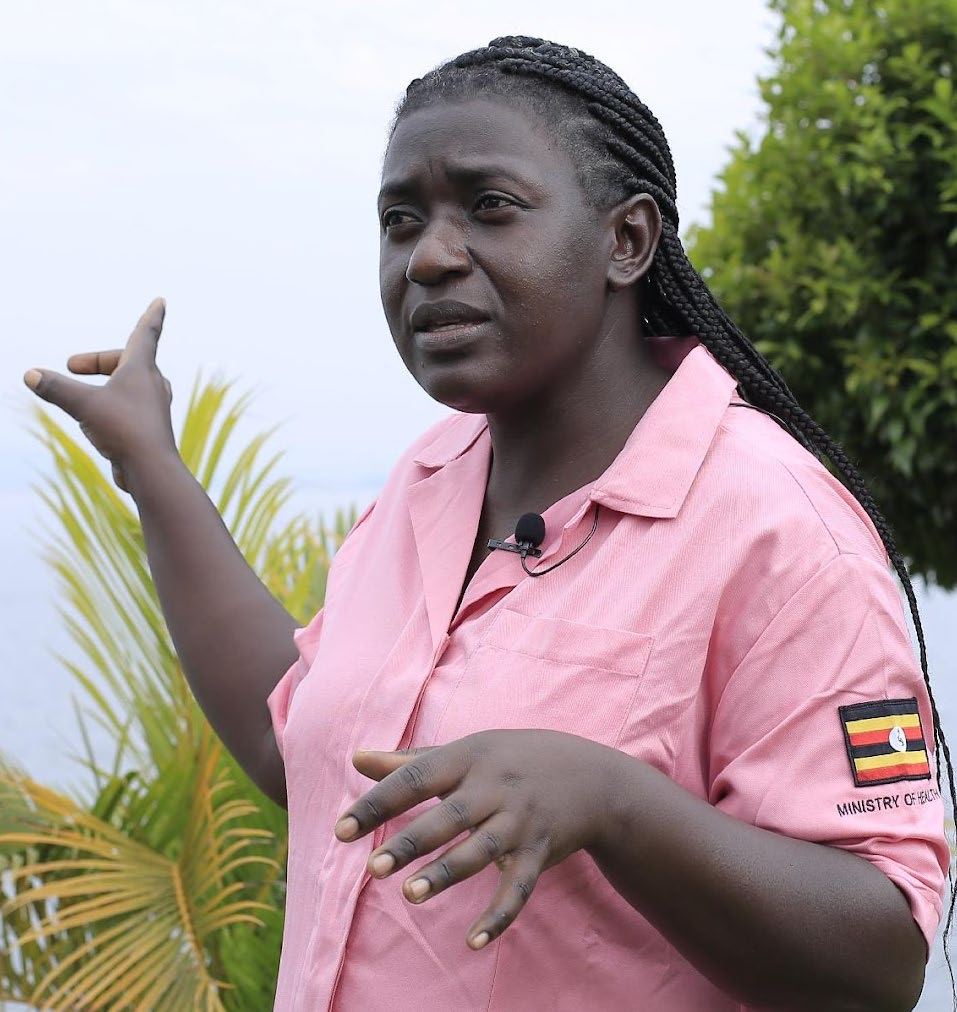 Midwife Rose Kalaala at Buvuma Health Centre IV
“If anyone tried to take away the NASG from our unit, I would fight to keep it. We cannot imagine working without it. Since using the NASG, we have seen no maternal deaths from excessive bleeding. Previously, we relied heavily on blood transfusions and other interventions, but with this innovation, we have saved many mothers.”
Achieving SDG 3
From Kawolo to Naggalama, from Nyenga to the islands of Buvuma, the testimonies are the same: the Non-Pneumatic Anti-Shock Garment saves mothers’ lives.
Uganda, like many countries in Sub-Saharan Africa, is working toward the Sustainable Development Goal 3: with a specific target of reducing maternal mortality to less than 70 per 100,000 live births by 2030. Postpartum hemorrhage remains the leading barrier to achieving this target.
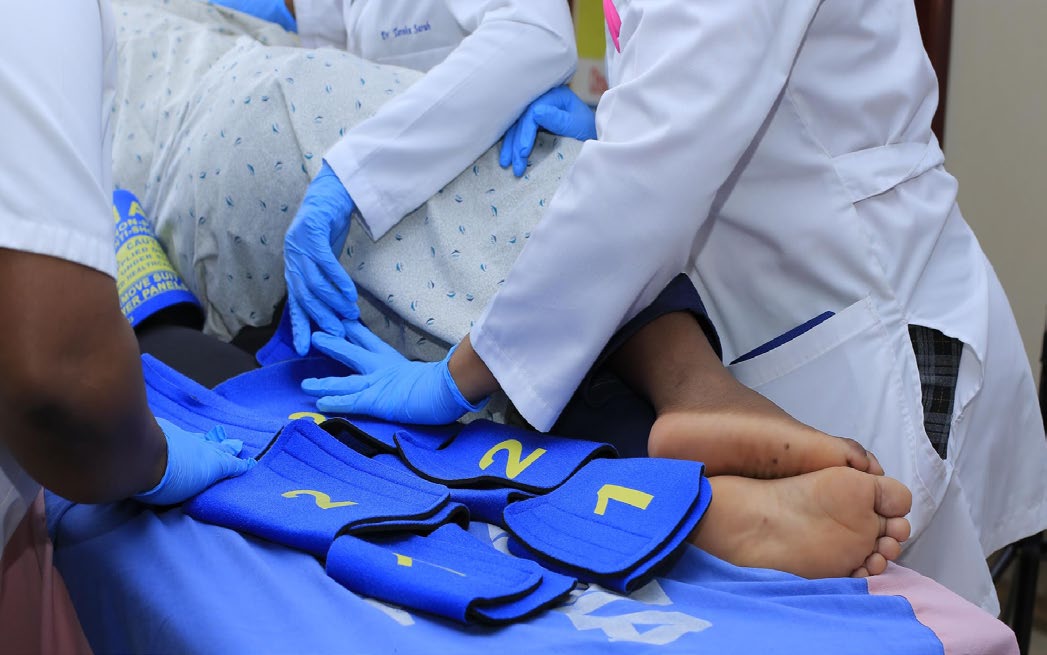 The NASG is a necessity. It aligns with WHO guidelines for managing PPH, strengthens Uganda’s maternal health system, and restores hope to health workers and families alike.
Challenges remain: limited supply of garments, size variations, and the need for continuous training. But the message from the field is clear: with wider availability, the NASG can transform maternal health outcomes across Uganda.
Every life saved is a step closer to Uganda’s health agenda and to the global vision of a world where no woman dies giving life.